
What to expect when you book a kindness keynote speaker
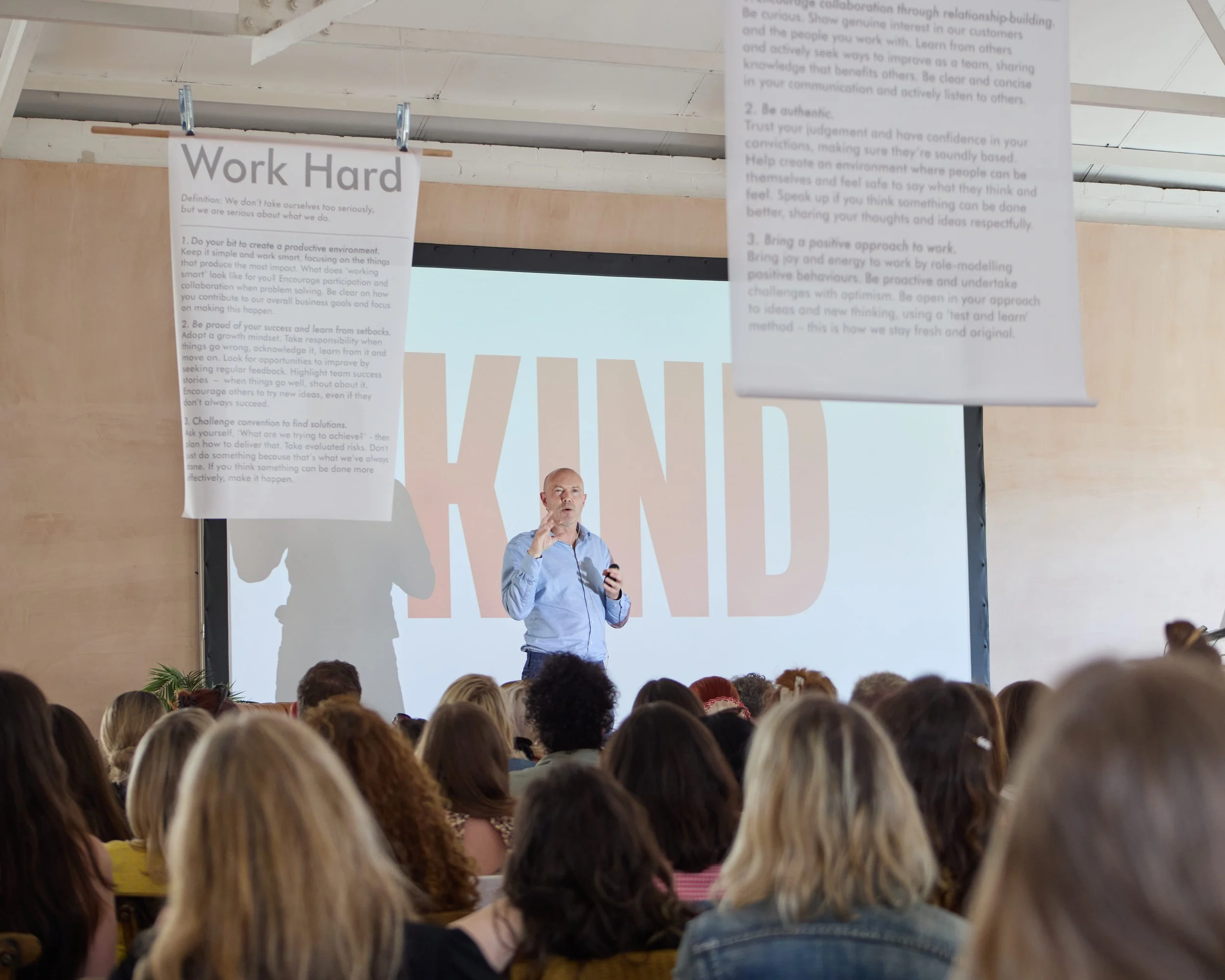
If you're an event organiser, an HR director or a leader putting together an away day, and you've been thinking about booking a keynote on kindness at work – this post is for you.
I've been speaking professionally for well over a decade, and I've noticed that the questions people have when booking a keynote on kindness tend to cluster around a few common themes. Will it land with a sceptical audience? Is this appropriate for a corporate setting? What does the audience actually take away? How does it connect to business performance?
Let me answer those questions directly.
Will it land with a sceptical audience?
Yes – and often most powerfully with the sceptics.
The first thing I do in a kindness keynote is address the scepticism directly. Because it's real. A significant proportion of any corporate audience will walk in with some version of 'kindness is soft' or 'this isn't relevant to our industry' in their head. I've spoken to investment banks, law firms, tech companies, police forces and defence contractors. Scepticism about kindness is universal and completely understandable.
The case I make isn't an appeal to values or a call to be nicer to each other. It's a business argument, grounded in research, case studies and data. I make the case that kind cultures outperform fearful ones, that retention and engagement are directly linked to how people feel treated, and that the 'business bastard' archetype is built on survivorship bias and cinematic myth. By the end, the sceptics are often the most engaged.
What does the audience take away?
The feedback I get most consistently from event organisers and attendees is that the talk is both inspiring and immediately practical. People leave with a specific way of thinking about kindness that they haven't had before, and with concrete things they can do differently on Monday morning.
The KIND keynote is built around the Eight Principles of Kindfulness at Work. These aren't abstract ideals – they're practical frameworks that people can apply to how they run meetings, give feedback, set expectations and handle difficult conversations. Audiences leave with tools, not just feelings.
What I hear most often afterwards: 'I've been thinking about this all wrong.' 'I finally understand the difference between nice and kind.' 'I know exactly what I'm going to do differently next week.'
Is this appropriate for a corporate setting?
Absolutely. In fact, the corporate setting is often where it lands best.
Kindness at work is directly relevant to the things that keep senior leaders and HR directors up at night: retention in a competitive labour market, psychological safety and the ability to have honest conversations, leadership development, employee wellbeing, culture change, performance. The KIND keynote addresses all of these through the lens of kindness, which tends to be both more memorable and more human than the standard leadership development framing.
I've delivered versions of this keynote to teams of 15 and audiences of 1,500. It works at leadership away days, company conferences, HR summits, team off-sites, and as part of broader culture or wellbeing programmes.
What's the format?
The standard KIND keynote runs 45–60 minutes, with Q&A built in. There's also an extended workshop version (half or full day) that goes deeper into the Eight Principles and includes exercises and breakout discussions.
Everything is tailored to your organisation. Before any keynote, I'll have a briefing call to understand your context – what's happening in the business, what you want the audience to leave thinking and feeling, and any specific themes you'd like woven in. The resulting talk will feel specific to your people, not generic.
I'm based in Brighton and speak across the UK, Europe, North America and beyond. Both in-person and virtual formats are available.
What about the Productivity Ninja keynote?
As well as the KIND keynote on kindness and leadership, I also deliver the Productivity Ninja keynote – which covers the nine characteristics of a Productivity Ninja, attention management, and practical strategies for focus and clarity in modern knowledge work.
Some clients book both – either at the same event or as part of a series – because the two themes connect naturally. Kindness and sustainable productivity aren't in tension; they're mutually reinforcing. You can't build a kind culture without removing the busyness that prevents people from noticing each other. And you can't be sustainably productive in a culture that doesn't care about you as a person.
How do you book?
The best way to start is to get in touch directly. Tell me about your event, your audience and what you're trying to achieve. I'll be honest about whether I think it's a good fit – and if it is, we'll take it from there.
All enquiries go to my assistant, Emilie, at emilie@grahamallcott.com, or you can use the speaking enquiry form here.
In the meantime, the free KIND resources pack and the 8 Ways to Kindness video course give your team a flavour of the ideas before the event.
Frequently asked questions
What is a kindness keynote speaker?
A kindness keynote speaker delivers a talk on the role of kindness in workplace culture, leadership and performance. The best keynotes on this topic make a rigorous business case for kindness – grounded in research and case studies – rather than making a purely values-based argument.
Is a kindness keynote appropriate for corporate events?
Yes. Kindness at work is directly relevant to retention, psychological safety, leadership development, employee engagement and culture change – all of which are core business concerns. A well-delivered kindness keynote addresses these through a human and memorable lens.
How do you choose a keynote speaker on kindness?
Look for someone with real expertise in the subject – ideally an author or researcher who has thought deeply about it – combined with experience of corporate audiences and a track record of positive outcomes. Ask for testimonials from similar events and request a briefing call before committing.
What should I ask a keynote speaker before booking?
Ask about their briefing process, how they tailor content to specific audiences, what the audience typically takes away, and what format options are available. Also ask to speak to a previous client from a similar sector or event type.