
How to Choose a Keynote Speaker Who Actually Changes Behaviour

Ask almost anyone who books speakers for a living and they'll tell you the same thing, usually with a slightly rueful look: the talk that gets the biggest reaction on the day isn't always the one that changes anything.
A lot of event organisers have sat through versions of this. The polished speaker, the well-rehearsed story arc, the room buzzing on the way out – and then nothing. No one doing anything differently a month later. No shared language, no shifted habits, no detectable change in how the team works. The energy evaporated somewhere between the venue and the car park.
The real test of a keynote is not the applause. It's whether anyone is doing anything differently weeks later. That's the measure that matters, and it's also the one that's hardest to buy for in advance. You can watch a showreel. You can read testimonials. You can't audition behaviour change. So you end up optimising for the wrong signal, and sometimes getting a very expensive room full of people who feel inspired for an afternoon and then go back to exactly how things were. Here's what to look for instead.
Relevance beats fame
A big name fills seats and makes the programme look impressive. It does not guarantee anyone learns anything. A speaker who has genuinely lived the thing your audience is wrestling with will land harder than someone famous talking about a topic they were briefed on last Tuesday. Ask yourself what your people are actually struggling with, then find the person who has thought hardest about that – not the person with the most followers.
Look for someone who wants to brief properly
The speakers worth booking will want to talk to you before the event. They'll ask about the audience, the room, what's going on in the organisation, what a good outcome looks like. The ones who just want the date and the fee, and will send the same talk they gave yesterday, are the ones whose talks evaporate by lunchtime. A good briefing call is the single best predictor I know of a talk that lands.
Frameworks people can actually carry out of the room
Inspiration on its own has a half-life of about a day. What makes a talk stick is when people leave with something usable – a way of thinking, a question to ask, a small change they can make on Monday. When you're vetting a speaker, ask them: what will my people be able to do differently afterwards? If the answer is all about how they'll feel, be a little wary. Feelings fade. A clear, repeatable idea doesn't.
Ask about behaviour, not ratings
Most speakers can show you glowing feedback scores. Far fewer can tell you a story about a team that did something different because of their talk. When you take references, don't ask “was it good?” – ask “what changed afterwards?” The pause that question produces tells you everything.
None of this is about avoiding speakers who are entertaining. The best talks are gripping and useful – the entertainment is what gets the idea past people's defences. The mistake is booking the entertainment and hoping the change comes free with it.
So the question worth sitting with is this: when you picture your event three months later, what do you want to be true that wasn't true before? Choose the speaker most likely to make that happen – not the one most likely to get the loudest clap on the day.
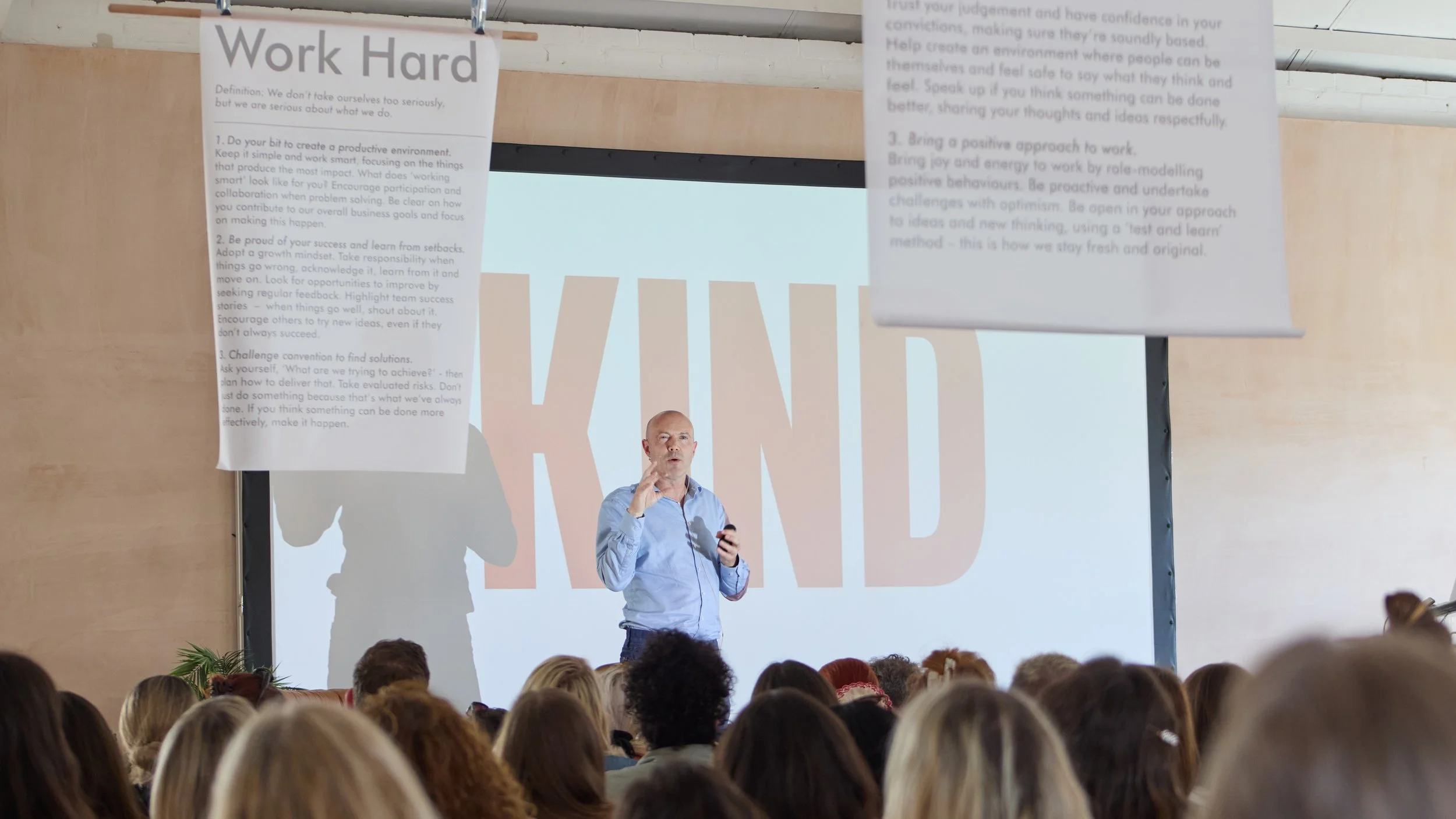
If you're choosing a speaker for a conference or leadership event and want a talk built around behaviour change rather than applause, you can find out about booking me to speak here.
Frequently asked questions
How do I choose a keynote speaker for a conference?
Start with the outcome you want, not the speaker’s profile. The most important things to look for are genuine expertise in the topic your audience is wrestling with, a willingness to brief properly before the event, and evidence that previous audiences changed their behaviour – not just that they enjoyed the talk. Ask references what changed afterwards, not whether it was good.
What makes a keynote speaker worth booking?
A keynote speaker is worth booking when they tailor their talk to your audience, have a framework people can carry out of the room, and can point to real behaviour change in previous audiences. Fame and polish matter far less than relevance and a thorough briefing process.
How do you know if a keynote speaker will actually make a difference?
Ask the speaker what your people will be able to do differently on Monday after the talk. Ask their references what changed in the weeks following the event. Showreels and feedback scores measure the applause, not the impact – and the two often diverge.
What should I ask a keynote speaker before booking them?
Ask: what will my audience be able to do differently after this talk? Ask: will you do a briefing call to understand our specific context? Ask references: what changed in your team after the talk? Those three questions will tell you more than any showreel.