
Why being less busy makes you more productive
Here's something I've been saying for years, and it still surprises people every time:
Busy is not the same as productive.
In fact, in my experience, the busiest people are often the least productive. And learning to be deliberately less busy is one of the most powerful things you can do for the quality of your work.
The busyness trap
We've built a culture that treats busyness as a virtue. A packed calendar is a sign of importance. Being slammed is a badge of honour. 'How are you?' 'Busy!' – delivered with a slight weariness that's somehow also a boast.
But busyness and productivity are completely different things. Busyness is a measure of activity. Productivity is a measure of outcome. You can be ferociously busy and achieve almost nothing that matters. You can have a quieter week and create something genuinely valuable.
The problem is that busyness feels productive. The constant activity, the full inbox, the back-to-back meetings – they give you a sense of momentum even when you're going nowhere in particular. And so we keep adding to the schedule, keep saying yes, keep filling the gaps, and wonder why we end the week feeling exhausted and vaguely behind.
What actually drives productivity
In How to Be a Productivity Ninja, I make the case that time management is dead. We've run out of time to manage. The real resource we should be protecting is attention.
Great decision-making, creative thinking, deep work – all of these require sustained, undistracted attention. And attention is not infinitely renewable. It gets depleted. It needs space to recover. It cannot be squeezed into the gaps between meetings.
When you're truly busy – rushing from one thing to the next, never quite present, always half-thinking about the next item on the list – you're producing shallow work. You're completing tasks rather than thinking well. You're reacting rather than creating.
The Productivity Ninja approach starts with the recognition that a Ninja is not superhuman. They're calm. They're prepared. They're ruthless about what deserves their attention – and what doesn't.
The attention management shift
The shift from time management to attention management changes everything about how you approach a day.
Instead of asking 'how do I fit more in?', you start asking 'what deserves my best attention, and when?' Instead of filling every hour, you start protecting your most focused, energised time for the work that matters most. Instead of treating all tasks as equally urgent, you get ruthless about what actually needs doing now – and what's just noise.
One of the most useful concepts in How to Be a Productivity Ninja is the idea of 'big rocks' – a metaphor borrowed from Stephen Covey's 7 Habits. If you put the big rocks in the jar first (your most important priorities), you can then fit the pebbles and sand around them. But if you fill the jar with sand first, there's no room for the rocks. Most busy people fill their days with sand – email, admin, reactive tasks – and wonder why the important things never get done.
The kindness connection
There's something else that happens when you're constantly busy that doesn't get talked about enough: you stop noticing the people around you.
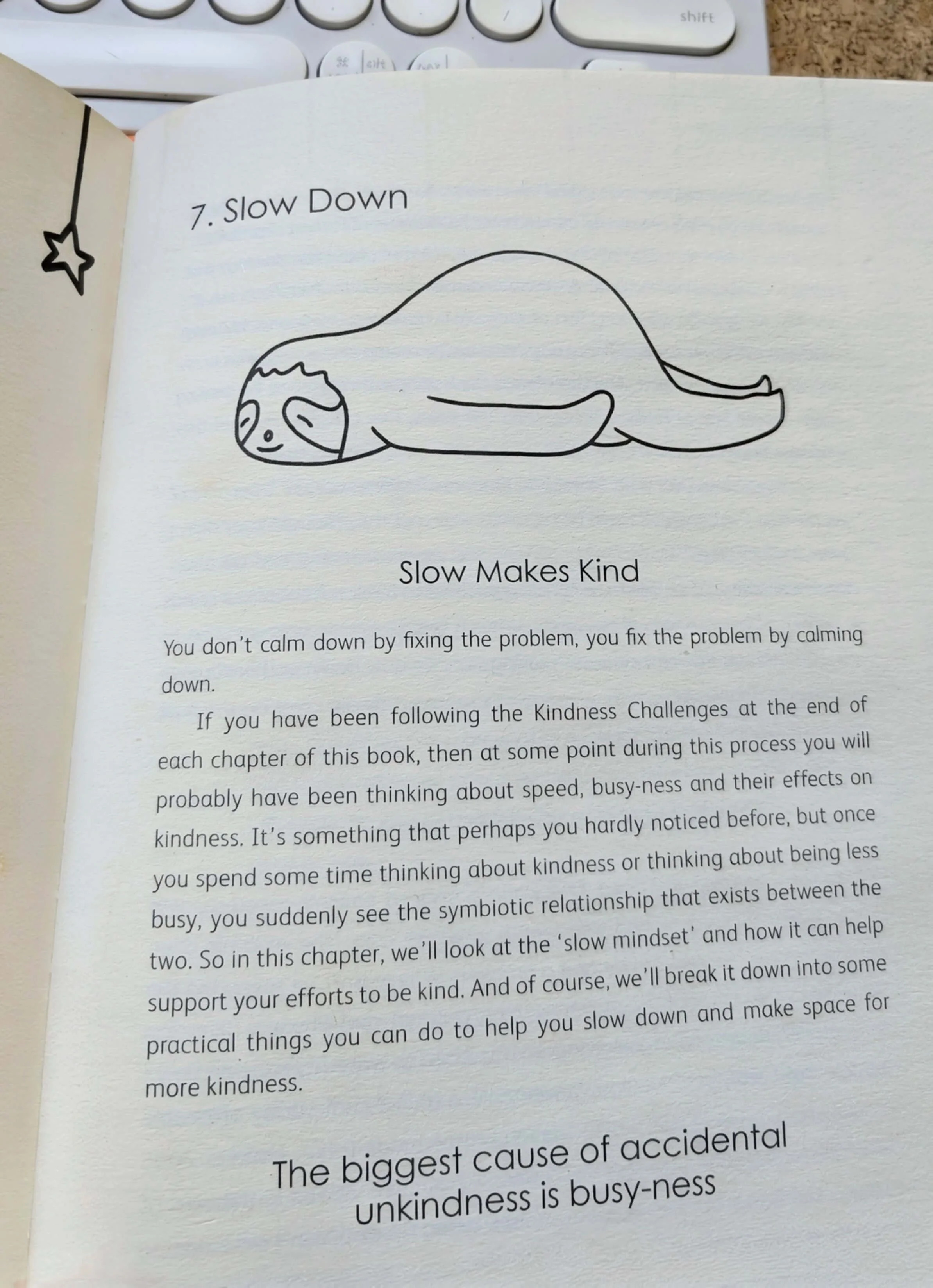
As I write in KIND, the biggest source of accidental unkindness at work is busyness. When we're rushing, we don't see the colleague who's struggling. We don't have the conversation that someone needs. We respond to messages in tones we'd never use face to face. We make people feel like a burden rather than a priority.
Being less busy isn't just a productivity strategy. It's a kindness strategy. The space it creates is space for other people, as well as for better work.
How to be deliberately less busy
This isn't about doing less. It's about doing the right things with genuine focus, rather than everything with shallow attention.
Start by protecting your best attention. Most people have a two to three hour window in the day when their thinking is sharpest. Guard that time. Don't fill it with email. Use it for the work that requires your full capacity.
Then get honest about what's on your list. Most to-do lists are a mixture of genuinely important things and tasks that feel urgent but aren't. The weekly review is the best tool I know for getting this clarity. Take 60 to 90 minutes once a week to review, reprioritise and plan. It saves multiples of that time in unfocused busy-ness.
And finally, start saying no more. Every yes to something is a no to something else. Every meeting that didn't need to happen is time that your best attention didn't get to spend on the work that matters.
Being less busy is a choice. How to Be a Productivity Ninja covers the full system. The free weekly checklist is a simple tool to help you plan your week with more clarity. And the free Productivity Ninja course is a good starting point if you want the full framework.
Frequently asked questions
Why does being busy not mean being productive?
Busyness measures activity; productivity measures outcomes. A packed schedule full of reactive tasks and unnecessary meetings can generate enormous activity with very little meaningful output. What matters is the quality and focus of your attention, not the volume of your activity.
How do I become less busy at work?
Start by protecting your best attention for your most important work. Use a weekly review to reprioritise regularly. Get honest about which meetings and tasks are truly necessary. And practise saying no to things that don't deserve your best time.
What is the relationship between busyness and kindness?
Busyness is the single biggest source of accidental unkindness at work. When we're rushing, we stop noticing people, stop listening well, and respond without the care we'd otherwise bring. Creating space in your schedule is both a productivity and a kindness strategy.