
The difference between nice and kind at work
There's a sentence I've been saying in workshops and keynotes for years now, and it never fails to land:
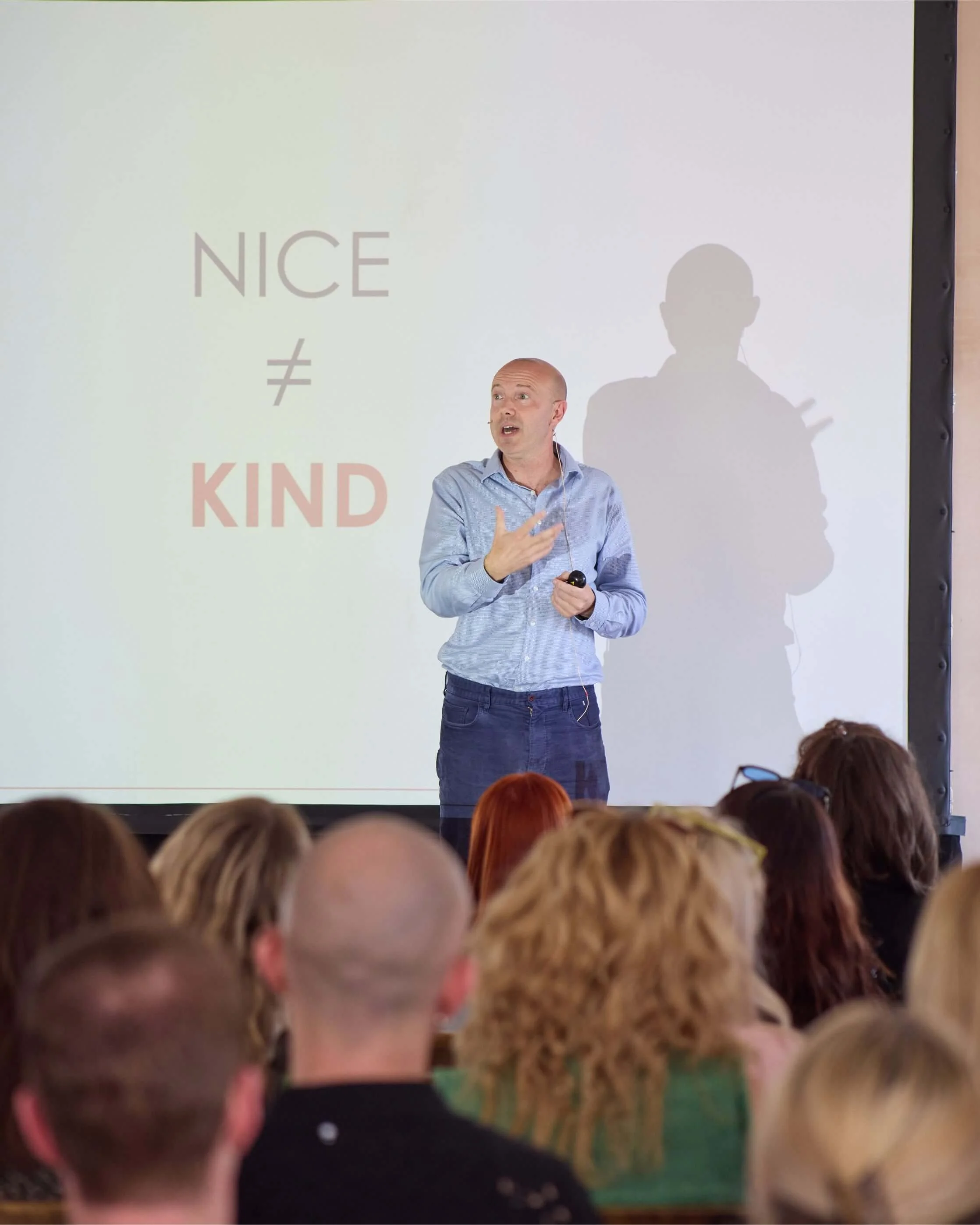
Nice is for you. Kind is for them.
People tend to pause when they hear it. Then something shifts. Because most of us have spent a long time thinking these two words mean the same thing – and realising they don't changes quite a lot.
What 'nice' actually means
Nice is what we do when we want to avoid discomfort. It's the path of least resistance. Nice is agreeing when you disagree, to keep the peace. It's softening feedback until it loses its usefulness. It's letting someone continue down a path you can see is wrong, because saying something feels awkward.
Nice prioritises the comfort of the person giving it. It feels kind. It presents itself as kind. But it isn't – because it puts the giver's discomfort above the receiver's actual needs.
I've seen so many organisations where 'nice' has become the default, and the results are always the same. Problems that could have been addressed early fester into crises. People receive feedback so diluted it doesn't help them grow. Difficult conversations get avoided until they become impossible ones. The culture feels warm on the surface and is quietly dysfunctional underneath.
What 'kind' actually means
Kind is different. Kind requires courage.
Kind is telling someone the truth – with grace, with care, and with their long-term interests at heart. It's having the difficult conversation early, because you respect the person enough to be honest with them. It's giving feedback that's actually useful, even if it's uncomfortable to receive. It's saying no when yes would be easier but wrong.
In KIND, I describe kindness as the action that happens in the gap. The gap between someone's needs and their current reality. The gap between what you could say and what you're holding back. Bridging that gap – even when it's awkward or risky – is kind. Staying safely on your side of it is nice.
The workplace cost of choosing nice over kind
When 'nice' becomes the cultural norm in an organisation, it creates a specific kind of dysfunction that's hard to name but easy to feel.
Performance issues don't get addressed until they're serious. Feedback is so wrapped in softeners it doesn't land. Meetings feel harmonious but produce no real challenge or honest disagreement. People say yes to things they can't actually deliver. Bad ideas make it through uncontested because no one wants to be the person who raises their hand.
This is what I call the Pushover Myth – the assumption that kindness means being accommodating, agreeable, and avoiding conflict. It doesn't. That's niceness. And niceness, at scale, is corrosive.
The kindest leader I've ever encountered was also the most honest. He was the person who'd tell you clearly when something wasn't working, who gave you feedback that was sometimes difficult to hear but always useful, who trusted you enough to be straight with you. Working for him felt safe in a real way – not because nothing was ever challenging, but because you always knew where you stood.
The nice–kind distinction in practice
Here are a few examples of what this looks like day to day:
A team member's work isn't hitting the standard required. The nice response: say something vague like 'great effort, just a few tweaks needed'. The kind response: have a clear conversation about what's falling short, why it matters, and how to improve.
A colleague is clearly overwhelmed. The nice response: say 'let me know if you need anything' and leave it there. The kind response: make a specific offer of help, or notice what they actually need without waiting to be asked.
You disagree with a decision in a meeting. The nice response: say nothing and go along with it. The kind response: raise your concern clearly and respectfully, because a decision made without all the available perspectives is usually a worse one.
Nice is easier. Kind is braver.
Warmth, care and gentleness are not wrong. They're part of what makes a kind culture feel human and worth being part of.
But warmth without honesty isn't kindness. Care without courage isn't kindness. A culture that feels nice but won't tell you the truth isn't a kind culture. It's a comfortable one. And comfortable isn't the same as good.
Once you see the distinction between nice and kind, you can't unsee it. You start to notice when you're choosing nice – when you're protecting your own comfort under the guise of being considerate. And you start to make different choices.
Because ultimately, the people around you deserve the truth. They deserve honesty delivered with grace. They deserve someone who cares enough to say the difficult thing. They deserve kind, not nice.
You'll find the full exploration of the difference between nice and kind in KIND: The Quiet Power of Kindness at Work. The free 8 Ways to Kindness video course is a practical companion if you want to start putting these ideas into action.
Frequently asked questions
What is the difference between nice and kind?
Nice prioritises the comfort of the person giving it – it avoids difficulty and keeps the peace. Kind prioritises the needs of the person receiving it, even when that requires honesty or courage. Nice is for you. Kind is for them.
Can you be too nice at work?
Yes. A culture of niceness avoids difficult conversations, dilutes feedback and lets problems fester. It feels warm but often fails people in the ways that matter most. Real kindness – honest, courageous, purposeful – is more valuable than comfortable niceness.
Is being kind the same as being a pushover?
No – this is one of the most common misconceptions about kindness. Kind leaders set clear expectations, give honest feedback and address problems directly. What makes them kind is not that they avoid difficulty, but that they approach it with care and genuine concern for the other person.